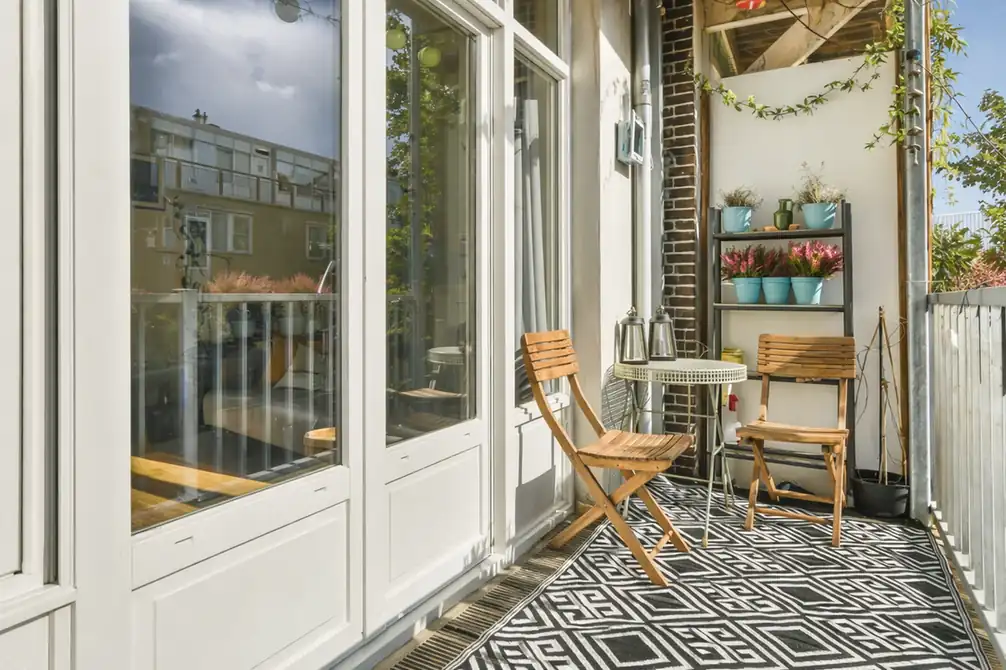



A west- or south-facing balcony in Mumbai can be pleasant on a sunny day, but direct afternoon sun can make it hot and uncomfortable. Moreover, extreme heat can even damage your balcony furniture. Effective balcony interior design must account for UV exposure, heat buildup, humidity, and monsoon moisture cycles. Durable flooring, weather-resistant furniture, and integrated shading solutions are essential for creating a balcony that remains usable and attractive across seasons.
A west or south-facing balcony in Mumbai sounds like a selling point. And in the morning, or on a cool January evening, it is. But between noon and five in the afternoon, from March through October, that same balcony becomes genuinely unusable if it has not been designed to withstand what Mumbai’s sun actually does to materials and people.
Most balcony interior design decisions are made based on how a space looks in photographs taken in pleasant light. Very few are made based on what happens to those materials after harsh summers.
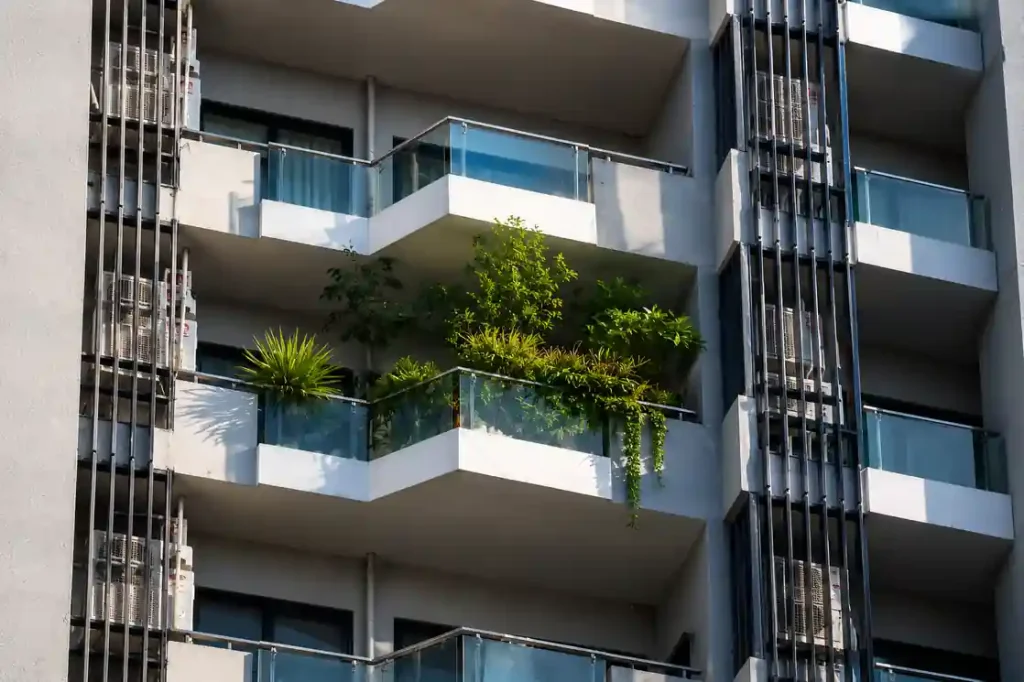
This is worth understanding in concrete terms before making any material or furniture decisions. Some of the factors affected by direct sunlight include:
This is the most consistent problem. Fabrics fade, synthetic rattan yellows and becomes brittle, painted surfaces chalk and peel, and wood that has not been properly treated cracks along the grain as it expands and contracts through repeated heating and cooling cycles.
Dark-toned flooring on a west-facing balcony in June absorbs heat through the afternoon and radiates it back through the evening. The balcony, which should be pleasant after sunset, is still too warm to sit on at 8 at night.
Mumbai’s humidity means materials that heat up during the day are absorbing moisture at night. Over a few years, this cycle degrades most materials faster than in any other Indian city.
Good balcony interior design accounts for all three. Most standard balcony setups account for none of them.
Flooring is the largest surface area on any balcony and the one most directly exposed to both sun and rain.
Here are a few balcony interior design ideas that are commonly used by the top interior designers in Mumbai:
These reflect rather than absorb heat, are impervious to moisture, and do not fade. Avoid dark-toned tiles on south or west-facing balconies.
Standard WPC decking is acceptable. Look for products with UV stabilisers in the specification. Untreated or cheap composite boards warp and fade within two to three years in direct Mumbai sun.
Kota and sandstone are durable and naturally cool underfoot, though they require sealing to handle the monsoon moisture cycle.
Avoid solid wood decking unless you are committed to annual maintenance. Teak holds up better than most, but even teak requires oiling every season in Mumbai’s conditions.
Apartment balcony decorating ideas that prioritise how furniture looks over what it is made of consistently produce the same outcome: faded, warped, or structurally compromised pieces within a few years.
Furniture materials that perform well under direct sunlight:
These are lightweight, rust-resistant, and unaffected by UV exposure.
The colour is part of the fibre rather than applied to the surface, which means UV degradation does not affect the tone the way it does with standard outdoor fabrics.
Choose these over standard PVC or natural rattan, as they handle heat, UV, and moisture without degrading visibly.
For a modern balcony design that holds its appearance over time, the material specification matters more than the style. Most furniture silhouettes are available in durable materials.
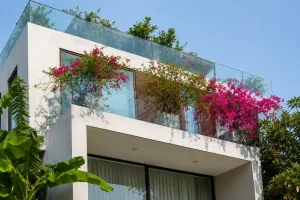
No matter how good the material selection, a fully exposed Mumbai balcony remains uncomfortable during peak afternoon sun. Shading is what determines whether the space is actually usable between March and October.
Effective shading options for Mumbai balconies:
They can be extended during peak hours and retracted when not needed, which prevents the awning itself from degrading faster than necessary.
These provide shade, reduce the radiated heat from the balcony floor, and improve air quality. When it comes to compact flat balcony decorations in India, they also add privacy without solid walls.
These work particularly well on balconies with railings rather than full walls, where other shading options are harder to anchor.
The shading solution needs to be integrated into the balcony interior design from the start, not added as an afterthought once the furniture is in and the space is already uncomfortable.
Balcony interior design in Mumbai requires a different brief than in other parts of India. Bonito Designs approaches it by mapping the balcony’s orientation and peak sun exposure before making any material or layout recommendations.
Our Life Design philosophy means the design is built around when and how the household actually uses the space, whether that is morning coffee, evening unwinding, or weekend hosting. Material specifications are chosen for durability in real Mumbai conditions, not for how they photograph.
The right balcony interior design makes it usable, durable, and worth spending time in throughout the seasons. If you want your balcony designed for how Mumbai actually is, book a consultation with Bonito Designs today.
Light- to mid-toned porcelain or vitrified tiles are among the best flooring options for sunny Mumbai balconies because they reflect heat, resist moisture, and fade slowly.
Powder-coated aluminium, HDPE rattan, and solution-dyed acrylic fabrics are suitable for balconies exposed to direct sunlight because they resist UV damage, heat, and moisture.
West-facing balconies receive strong afternoon sun, especially between noon and 5 PM. Dark flooring and untreated materials absorb this heat and radiate it back even after sunset.
You can make a Mumbai balcony more usable by adding retractable awnings, external blinds, trellis panels, or vertical garden screens to reduce direct sunlight and heat buildup.
Material selection is important because Mumbai’s sun, humidity, and monsoon moisture can cause fading, warping, cracking, peeling, and faster deterioration if the wrong materials are used.